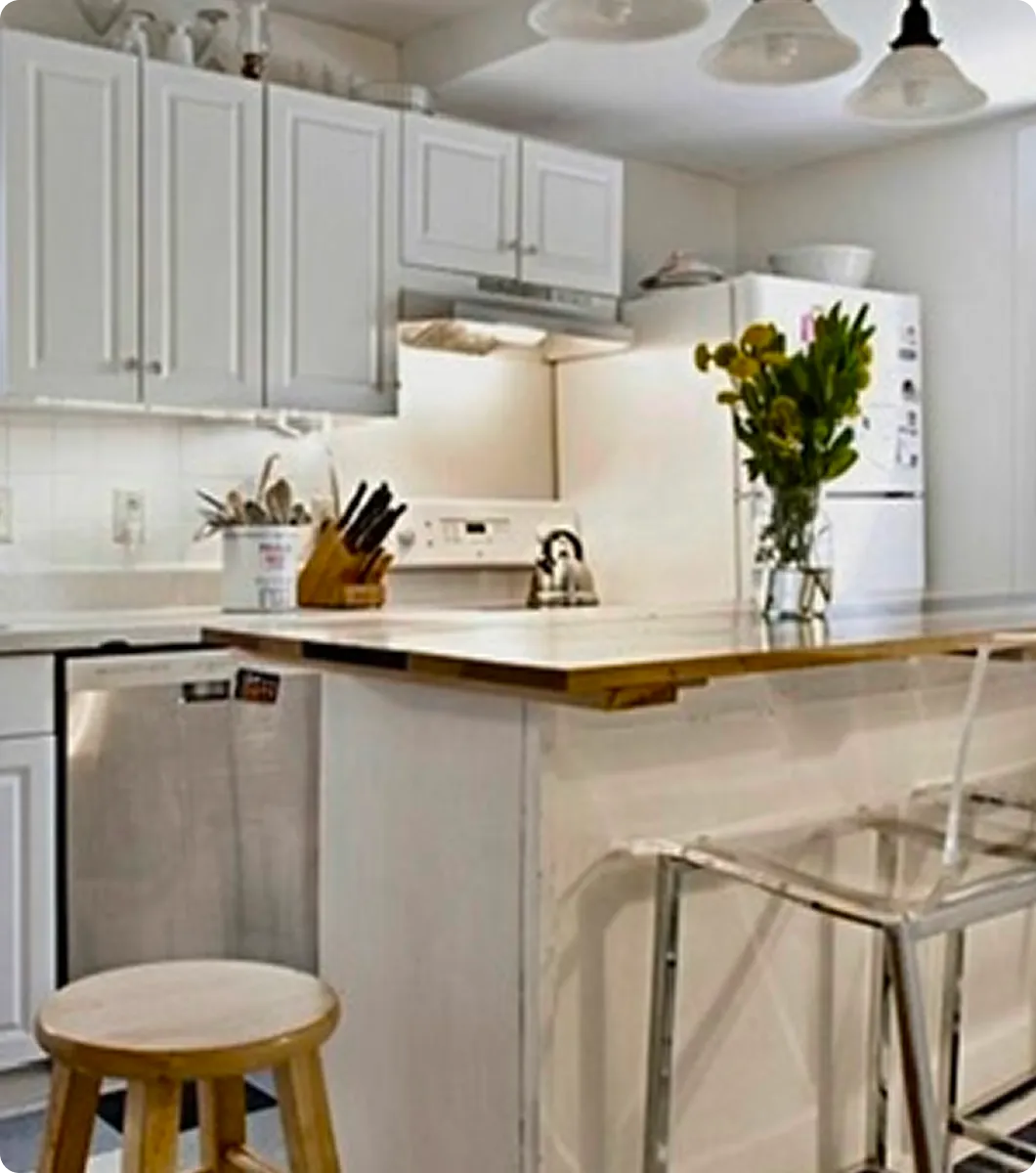
Decide whether your cabinets are a good candidate
Cabinet painting can refresh the appearance of a kitchen when the layout and cabinet structure still work for you. Start by checking door alignment, drawer operation, damaged edges, and the condition of the boxes. Paint changes the finish; it does not repair a poorly functioning layout or failing construction.
Tell the estimator whether the surfaces are wood, veneer, laminate, or previously painted. Different substrates and existing finishes can require different adhesion strategies. Ask whether a sample or test area is appropriate before committing to the full kitchen.
Define the included components: door fronts and backs, drawer fronts, face frames, exposed box sides, toe kicks, islands, molding, and cabinet interiors. Interiors are not automatically included. If you want new hardware, ask whether filling old holes and drilling new ones are part of the scope.
Cleaning and adhesion come before the new color
Kitchen cabinets collect grease and residue from years of use. Those contaminants need to be addressed before coating. Ask how surfaces will be cleaned and how the crew avoids spreading residue during preparation.
Sanding or other surface preparation should fit the substrate and coating system. Existing gloss, worn edges, damaged areas, and previous coatings all matter. The contractor should explain the primer or bonding steps and why the system is suitable for your particular cabinets.
Doors and drawers need an organized removal and labeling process if they will be refinished separately. Hardware should be protected or removed as appropriate. Confirm where preparation and coating will happen, how your kitchen will be contained, and how nearby floors and counters will be protected.
Understand cabinet coatings and finish expectations
Cabinets are frequently handled, wiped, and exposed to kitchen activity. Ask for a coating designed for the intended use and the actual substrate. A wall paint recommendation alone does not explain the cabinet finish system.
Spraying can produce a smooth appearance, while other methods may be appropriate for certain surfaces or work areas. Ask how the chosen method affects texture and whether a sample finish is available. Agree on the expected look before the entire set of doors is coated.
Wood grain and existing surface defects can remain visible through paint. Filling grain or creating an especially smooth finish can add preparation work. Discuss those expectations early, along with color, sheen, and how the new finish will look next to your counters and backsplash.
Plan kitchen access, installation, and cure time
Ask which days you will have limited access to the kitchen and which appliances or storage areas will be affected. Some work may happen off site, while boxes and fixed components remain in the home. Understand the plan before moving food, dishes, and small appliances.
Dry-to-touch is not the same as fully cured. Doors may be installed before the coating reaches its final hardness, depending on the product and process. Ask for specific instructions on handling, cleaning, and avoiding contact or pressure during the early period.
A careful reinstallation includes labeled doors, aligned hardware, and a final check of drawer and door operation. Discuss bumpers, hinges, and touchup procedures. If you are also changing counters or backsplash, coordinate trades so new finishes are protected from later work.
Compare cabinet painting proposals carefully
Door and drawer counts are useful, but complexity also depends on cabinet condition, size, detailed profiles, exposed sides, islands, and finish expectations. One kitchen with fewer components may require more preparation than a larger kitchen in good condition.
Compare the included surfaces and process before judging price. Ask about cleaning, preparation, primer, finish products, removal, transport, masking, hardware, reinstallation, and care instructions. Make sure upgraded grain filling or new hardware work is identified separately.
Consider your longer-term plans. If the cabinets need extensive structural repairs or you want a different layout, painting may not be the best first investment. If the structure works and your goal is a new appearance, a clearly defined refinishing scope can help you decide with confidence.
What your written proposal should explain
Use these details to compare equivalent scopes. Ask for clarification when a proposal leaves a component or process unspecified.
| Project component | Questions to resolve |
|---|---|
| Doors and drawers | Count, front and back surfaces, labels, removal, finish method, and reinstallation. |
| Fixed components | Face frames, exposed ends, island panels, toe kicks, and molding. |
| Preparation | Grease removal, substrate assessment, damage repair, sanding, and adhesion system. |
| Finish quality | Named coatings, sheen, grain visibility, sample finish, and cure instructions. |
| Hardware and interiors | Reuse or replacement, filled holes, new drilling, hinges, and separately priced interiors. |
Your pre-project checklist
- Count doors and drawer fronts before requesting estimates.
- Photograph damaged edges and areas near the range or sink.
- Identify your existing cabinet material when possible.
- Approve a color and finish sample alongside your counters.
- Choose hardware before filling or drilling begins.
- Confirm kitchen access and post-project care instructions.
Keep decisions in writing
Save your accepted estimate, final colors, product information, and approved changes together. Those details make scheduling, the final walkthrough, and later touchups easier.
Cabinet painting questions
Is cabinet painting the same as cabinet refacing?
No. Painting changes the finish on existing components. Refacing generally changes door and drawer fronts and may cover visible box surfaces. If you want a new door style, discuss replacement or refacing options separately.
Can laminate cabinets be painted?
Some laminate surfaces can be coated with an appropriate preparation and adhesion system, but suitability depends on the material and condition. Ask for a substrate assessment and discuss testing before proceeding.
Will wood grain disappear after cabinet painting?
Not necessarily. Grain can remain visible through the finish. If you want a smoother appearance, ask whether grain filling is offered, what result is realistic, and how it changes the cost and schedule.
How soon can I clean newly painted cabinets?
Follow the coating manufacturer’s and contractor’s cure instructions. A surface that feels dry may still be vulnerable to pressure or cleaning. Ask for written care guidance and approved cleaning methods before the project ends.
Can I change the handles at the same time?
Often you can, but a different hole spacing or hardware style can require filling and drilling. Choose the hardware early and confirm whether fitting, hinge adjustments, and installation are included in the estimate.